

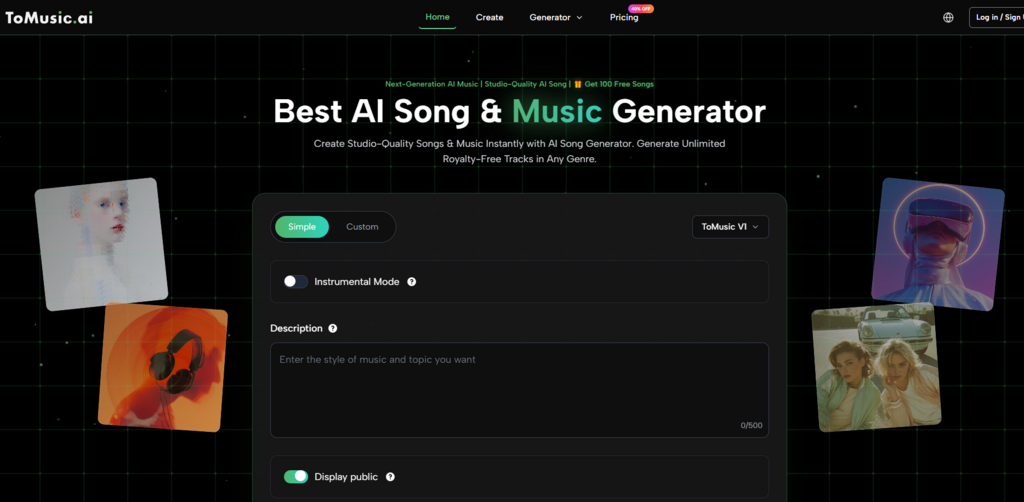
A lot of music technology is built around the assumption that the user begins with sound. But many songs do not begin that way. They begin with language. A person writes a line in a notebook, types a chorus into their phone, or saves a verse because it feels emotionally true even before any melody exists. That is why I wanted to test AI Music Generator from a lyric-first perspective. I was less interested in whether it could make polished music from a generic prompt and more interested in whether it could help words become audible in a useful way.
This is a meaningful test because lyric-first creators are often underserved. Traditional music tools can feel heavy if the user does not yet know what the arrangement should be. At the same time, some generative tools are better at producing mood than at respecting text. They create songs that sound plausible, but the user still feels distant from the result because the words were never truly the center of the process.
ToMusic is interesting here because its public structure openly supports custom lyrics as a starting point. That changes the question. Instead of asking whether the platform can generate a song at all, the more relevant question becomes whether it can help a writer discover what kind of song their words want to become. That is a subtler challenge, and in my observation, it is also the more valuable one.
So I tested the platform with that exact mindset. I imagined the user not as a producer but as someone holding half-finished words, a chorus idea, or a rough emotional draft. I wanted to see how the workflow felt, where it was strong, where it became uncertain, and whether it could act as a real creative partner in the earliest stage of songwriting.
Why a Lyric-First Test Matters
There is a reason many people stay stuck at the idea stage. Words are often easier to begin than music, but harder to hear without help.
Lyrics Capture Meaning Before Sound Exists
A line can contain the emotional core of a song long before arrangement, tempo, or instrumentation are clear. That makes lyric-first workflows especially important for people who think narratively.
Not Everyone Starts With Chords
Experienced producers sometimes forget how common this is. Many ordinary creators do not sit down thinking in harmony or sound design. They think in phrases, images, and emotional logic.
That Changes What a Useful Tool Looks Like
For lyric-first users, the ideal system is not one that dazzles immediately. It is one that helps text reveal its possible musical forms without demanding advanced production knowledge.
Most Early Songwriting Needs Interpretation, Not Completion
A writer with unfinished lyrics rarely needs a definitive final version on the first try. They need contrast. They need to hear what happens if the words become intimate, cinematic, restrained, or more rhythmic.
That is what made ToMusic worth testing in this specific way.
How I Set Up the Lyric-First Test
I used the platform as someone might use it during actual creative uncertainty. The goal was not to trick the system with extreme prompts. The goal was to see how it handled real writing conditions.
I Used Incomplete and Complete Text
Some tests began with partial choruses. Others used fuller lyric drafts. This mattered because many people approach music tools before their writing is fully stabilized.
I Changed Emotional Direction Without Changing the Core Words
I wanted to see whether the same lyrics could suggest different songs depending on how the prompt context framed them. This is one of the most valuable things an AI-assisted system can offer a writer.
I Paid Attention to Interpretation, Not Just Sound Quality
A musically pleasant result is not enough if it misses the emotional center of the words. So I judged outputs partly by whether they felt aligned with the lyric’s implied tone.
The First Important Result Was Psychological
Before getting into technical or musical observations, one thing became clear very quickly: lyric support changes the emotional experience of using the platform.
The Tool Felt More Personal With Real Words
Prompt-only generation can feel abstract. Lyric-led generation feels more personal because the user is not only asking for music. They are asking for interpretation.
That Increases Emotional Stakes
When the platform works well, the result feels affirming. When it misses, the miss feels more visible. This is not a weakness of the product so much as a consequence of entering the system with more meaningful source material.
It Also Increases Creative Payoff
A strong lyric-based output can clarify a song idea much faster than silent writing alone. Even imperfect generations can reveal pacing, emphasis, or emotional angle.
This Makes ToMusic More Than a Prompt Toy
In my testing, the platform felt most valuable when it was allowed to respond to text rather than only broad mood instructions. That is when it started to resemble a songwriting aid instead of a generic generator.
What Happened When I Used Raw Lyrics
The first lyric tests used unfinished material. I deliberately avoided cleaning everything into neat final form.
Raw Lyrics Produced Mixed but Useful Results
Not every result was clean. Some generations felt closer to a draft interpretation than a polished musical statement. But even then, the outputs often helped reveal what the writing wanted more clearly than silent reading could.
Hearing Weakness Is Also Valuable
A line that looks strong on the page can sound flat once voiced musically. That may seem disappointing, but it is actually useful information. Good tools do not only flatter ideas. They expose where revision may be needed.
The Platform Helped Surface Rhythm Problems
In several cases, the output made it easier to notice where a lyric was too dense, too repetitive, or awkward in flow. That kind of feedback is difficult to get from text alone.
Better-Structured Lyrics Improved Results Quickly
Once the wording became slightly more deliberate, the outputs became more coherent. This suggests that ToMusic works well as a feedback loop. The user provides text, hears what happens, adjusts the writing, and tries again.
That cycle is one of the best reasons to use the platform seriously.
Prompt Context Still Matters in a Lyric Workflow
The presence of lyrics does not eliminate the need for direction. It changes the kind of direction that matters.
Lyrics Need a Framing Signal
The same words can sound fragile, anthemic, intimate, commercial, dreamy, or melancholy depending on how the generation is framed. In my testing, better results came when the lyrical content was paired with a clear emotional or stylistic instruction.
The Words Are Not the Whole Instruction
This is an important point. Users may assume that once lyrics are present, the platform should infer everything else. In practice, mood and musical role still matter.
A Small Prompt Can Change a Lot
Even brief framing around tone, pace, or atmosphere can dramatically affect how the same lyrics are rendered. That is one of the reasons repeated testing is valuable.
This Is Where the Product Feels Creatively Alive
The strongest lyric-based sessions were not the ones where the first generation solved everything. They were the ones where each new attempt taught me something about the relationship between the words and the possible music.
Later in the workflow, this becomes the deeper appeal of Text to Music. It is not only about conversion. It is about discovery.
Why the Multi-Model Setup Helps Lyric Writers
Publicly, ToMusic describes multiple music models with different strengths. For lyric-first users, I think this is one of the most important parts of the product.
The Same Lyrics Need More Than One Interpretation Style
A lyric draft does not always announce what kind of song it should become. Sometimes it could work as a stripped, emotional piece. Other times it wants more lift, more power, or more balance.
Multiple Models Encourage Exploration Without Panic
Instead of assuming the text failed because one output disappointed, the writer can test a different musical interpretation path. That changes the emotional tone of iteration. It feels less like rejection and more like exploration.
This Protects Fragile Early Ideas
Early writing can be emotionally delicate. A system that allows multiple interpretive routes is kinder to that stage of creativity because it does not make one weak result feel final.
The Models Function Like Different Lenses
In my observation, the best way to think about the models is not as technical complexity, but as alternate listening perspectives. The same lyric may reveal different strengths depending on how it is voiced or structured.
What the Music Library Added to Songwriting
This part of the platform deserves more attention than it usually gets.
Songwriting Benefits From Organized Drafts
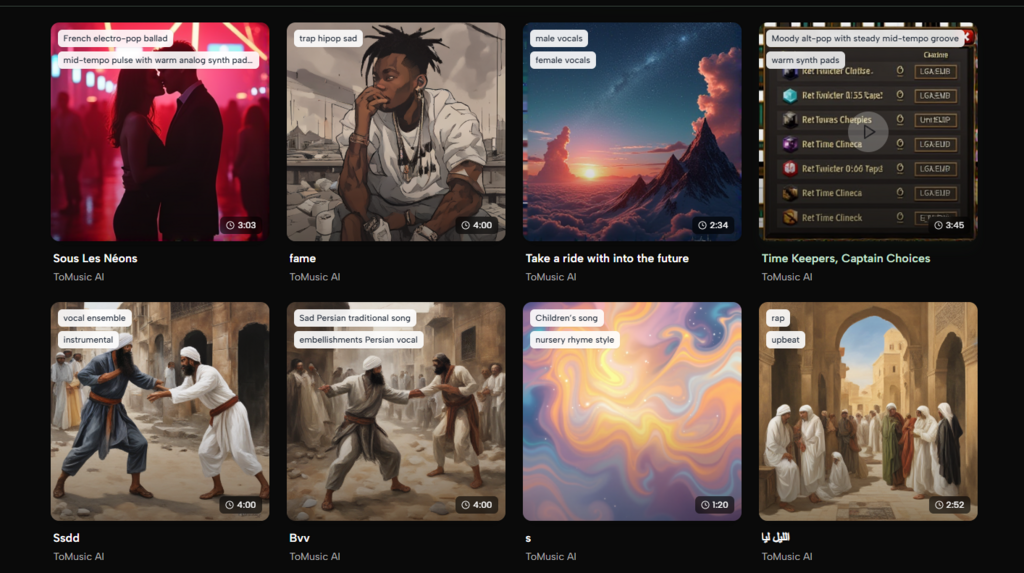
Publicly, ToMusic’s library stores songs along with associated details such as titles, tags, lyrics, descriptions, and generation parameters. For lyric-first work, this matters because text-based experimentation can quickly multiply into many versions.
Without Memory, Drafts Blur Together
A common problem with creative experimentation is that people forget why one version felt closer than another. Organized outputs help preserve that memory.
That Makes Reflection Easier
A writer can revisit not only the audio result, but also the lyrical context and generation direction that produced it. This turns the platform into a more usable draft environment.
The Library Encourages Revision Instead of Abandonment
When early attempts remain visible, users are more likely to refine their writing rather than throw it away. In songwriting, that psychological difference matters a great deal.
Where ToMusic Felt Strongest as a Writing Companion
After testing it through a lyric-first lens, a few strengths stood out clearly.
It Helps Writers Hear Their Words Sooner
This is perhaps the biggest advantage. Instead of waiting until a full production setup exists, a writer can hear emotional possibilities early.
It Rewards Better Writing Without Requiring Perfection
The platform seems to benefit from clearer lyric structure, but it can still provide useful feedback when the text is unfinished.
It Makes Iteration Emotionally Easier
Because the workflow is accessible and multiple models are available, trying again feels more natural and less punishing than in many traditional systems.
It Connects Writing With Version Comparison
This is one of the most important things a songwriting tool can do. Comparison helps writers understand not only which version sounds best, but which version best serves the words.
Where the Limits Became Clear
No lyric-first review should pretend the system resolves every songwriting challenge.
Interpretation Is Not the Same as Understanding
A platform can respond well to emotional cues without deeply understanding the human history behind the lyrics. Users should not confuse effective patterning with genuine emotional knowledge.
That Means Some Results Will Feel Generic
Even when they are musically competent, some outputs may feel slightly broader than the writer’s private emotional intent.
This Is Why Human Judgment Remains Central
The writer still has to decide whether the result honors the meaning of the words. No tool can make that choice on their behalf.
Several Passes Often Produce the Best Insight
In my testing, the first lyric-based result was often informative, but not always ideal. The most useful sessions involved multiple attempts shaped by what the earlier versions revealed.
The Tool Supports Songwriting, It Does Not Replace It
This may be the healthiest way to frame the experience. ToMusic can accelerate drafting, interpretation, and exploration. It does not eliminate revision, taste, or authorship.
Who Will Get the Most From This Kind of Workflow
The lyric-first strengths of ToMusic make it useful for several specific groups.
Writers With Finished Lyrics but No Production Setup
These users may benefit the most immediately. The platform gives written material a much faster path into audible form.
Songwriters Testing Emotional Direction
Someone unsure whether a lyric should feel intimate, cinematic, rhythmic, or soft can explore that question quickly.
Creative Teams Working From Scripted Language
Brands, educators, and content teams sometimes work from lines or phrases that need musical treatment. A lyric-forward workflow can be very helpful in those cases.
My Final Judgment on ToMusic as a Lyric Tool
After testing ToMusic from a lyric-first perspective, I think its real value lies in how it shortens the distance between writing and hearing. That may sound simple, but it is a profound shift for many creators. For years, lyrics could sit in silence for too long, waiting for the right collaborator, the right time, or the right technical skill level. A platform like this changes that waiting period.
It does not guarantee a final masterpiece, and it should not be judged by that standard. It should be judged by whether it helps good ideas become more visible earlier. In my observation, ToMusic succeeds at that. It gives writers a way to test, hear, compare, and revise with much less friction than traditional methods require. For lyric-first creators, that is not just convenience. It is creative access.